Wednesday, August 27, 2008

The Lucas Theater


Arthur Lucas and architect C.K. Howell opened the Lucas Theater in December 1921. The theater became a favorite venue for movies, touring vaudeville acts and a short-lived, in-house theater stock company. Staying on the cutting edge of technology, the theater was the first building in Savannah to install air conditioning in 1923, making the balcony a welcome retreat during the sultry summers. The front row in the mezzanine became known as “lawyer’s row” after local businessmen began spending their lunch hours sleeping in the cool, comfortable balcony.

With the advent of television and the population shift to the suburbs, the theater era began to wane. Downtown businesses began to feel the sting of suburbia, and the Lucas Theater was no exception. The Lucas Theater closed in 1976.


In 1986 the owners obtained a demolition permit and made arrangements to turn the once thriving Lucas Theater into a parking garage. The news motivated a group of Savannah citizens who founded The Lucas Theater for the Arts. The group pooled their resources, purchased the building and began what would be a $12 million restoration.

With a starting budget of $3 million and donations from Savannahians and celebrities such as Kevin Spacey, Clint Eastwood and the cast and crew of the film “Forrest Gump,” the complete restoration spanned nearly 13 years.

The Lucas Theater reopened in December 2000 with a screening of “Gone with the Wind,” and in the following months hosted Broadway shows and famous musicians. Although show attendance was high, the operation of the building proved too expensive to sustain on its own. The Savannah College of Art and Design recognized the theater as an important cultural asset in the community, and formed a relationship with The Lucas Theater for the Arts.

For a schedule of events, visit the Lucas website at http://www.scad.edu/venues/lucas/schedule.cfm

Also, for more information on Historic Savannah, please visit our popular on-line Savannah Traveler Magazine at www.savannahtraveler.com.


Monday, August 11, 2008

John Wesley - Methodist - Monument


The John Wesley Monument in the center of Reynolds Square was erected in 1969 by the John Wesley Monument Committee. and consists of a stepped and blocked rectangular granite pedestal, inscribed on all sides, supporting a bronze statue of John Wesley.

John Wesley is the founder of Methodism. Wesley came to Savannah in 1736 as an Anglican clergyman to the Colony of Georgia. Returning to England in 1738, his stay in Savannah was short. inspired by his associations with Moravians in Georgia and later in England, he revised his ideas and eventually formed the United Societies, a Protestant sect which evolved into the Methodist Church. In Savannah, Wesley resided near Reynolds Square. The Wesley Monumental Church, located on the periphery of Reynolds Square, is named in his honor.

For more on Savannah, please go to popular travel site: www.savannahtraveler.com

Monday, August 4, 2008

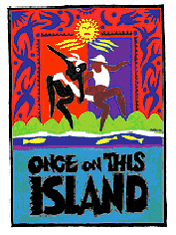
Once on this Island - A Great Show!


Last Saturday night, my wife and I went to see "Once on this Island" and WOW! This one act play was a joy to see and hear the great voices of its cast. When you consider that the actors are not professional, their performance equaled what I have seen in NYC. They are that good. If you are in the city, go see this wonderful show.

What is it about?

The City of Savannah’s Cultural Arts Theater announced that it will be presenting its summer "big stage" production of Once On This Island at the Trustees Theater, Aug. 1, 2, 3, 8, 9 and 10.

Once on This Island is a one-act musical with a book and lyrics by Lynn Ahrens and music by Stephen Flaherty. Based on the novel My Love, My Love by Rosa Guy, the musical is a retelling of Hans Christian Andersen's The Little Mermaid set in the French Antilles in the Caribbean Sea. Originally staged off-Broadway in 1990, the play was the winner of London's Olivier Award for "Best Musical," and was nominated for eight Tony ® Awards, including "Best Musical," "Best Book," and "Best Score."

Once On This Island is a jubilant Caribbean fantasy in which a young girl must prove to the mythical gods of her island that the power of love is stronger than death. It tells the story of Ti Moune (played by Brittany Hargrove) a peasant girl from one side of the island, and Daniel Beauxhommes, (played by Nick Bushkar) who is from a well-to-do family on the other side. As recounted by storytellers, Ti Moune pleads with the gods of the island to help her find true love, and the gods respond with a game of love, life and death, to see which is stronger. They devise an encounter for Ti Moune and Daniel, who eventually fall in love and, despite cries from their families and intervention from the gods, seek to prove that love will prevail. Social barriers and traditions prevent them from succeeding however, and a tragic tangle with the gods leads to a poignant ending.

“This musical explodes with music and emotion,” said director DJ Queenan. "The set, costumes and dances are a vibrant feast for the eyes. This play is a summer-time treat for all ages, with wonderful calypso and reggae rhythms, singing by talented local performers and choreography by the amazing team of Muriel Miller and Nancy Holmes from Abeni Cultural Arts." Other players to watch include Ryan McCurdy as the evil Papa Ge, Demon of Death and Latrecia Lewis as Asaka, Mother of the Earth.

Trustees Theater is located at 216 E. Broughton St. Performances will take place Aug. 1, 2, 8 and 9 at 8 p.m.; and Aug. 3 and 10 at 3 p.m. Tickets are $17 general admission; $12 seniors and students. Tickets are available at the Trustees Theater box office, by calling 912-525-5050 or online at www.scadboxoffice.com. A service charge applies to phone and internet ticket purchases.
On

Tuesday, July 29, 2008

Spanish Moss


While the Spanish Moss that hangs from Savannah’s majestic oaks is a true reminder that you are in the romantic deep South, it does not make a great souvenir. Often undetectable by the naked eye, a small biting bug called a chigger makes Spanish Moss its home. During the early days of the Colony, residents often stuffed and bounded their mattresses with the soft and bountiful Spanish Moss only to wake up irritated and itchy after the tiny bugs invaded their slumber. As a result, a common phrase emerged in Savannah, and it was – “Goodnight neighbor, sleep tight, and don’t let the bed bugs bite!”

My wife uses the moss for her potted plants but first she "nukes" them in the microwave. Put your Spanish moss in a bag and than proceed.

(Article reprinted from the Savannah Visitors Bureau web site)

Friday, July 25, 2008

Davenport House in Historic Savannah


A must see in Savannah is the Davenport House. This fine Federal-style home was completed by master-builder Isaiah Davenport as his family residence in 1820. Authentically restored, the house museum features original plasterwork, a cantilever staircase and furnishings true to the 1820s. The site also features a courtyard garden that was originally a Bicentennial project of the Trustees' Garden Club and was later re-designed by noted horticulturist Penelope Hobhouse. Threatened with demolition in 1955, the saving of the Davenport House was the first effort of the Historic Savannah Foundation and the beginning of the historic preservation renaissance in this port city.


Friday, July 18, 2008

Savannah River Street


On the bluff facing the Savannah River are nine blocks of renovated cotton warehouses that house about 80 restaurants, pubs, night spots, hotels, shops, galleries, and boutiques. Adding to the sight-seeing is a working harbor of huge, building-size ships and working tugs. Often, sailing ships from various countries are seen plowing the murky waters of the Savannah River. During the day, families stroll alongside the river, eating ice cream cones and browsing in gift shops. At night, people are eating at one of the many restaurants located on the river. Later in the night, Savannah's night life begins as the clubs and bars turn-up the music and invite you in to have fun and enjoy the beverage of your choice.

On River Street, there are several good options for lodging that offer a view of Savannah's main natural attraction (the river), along with quick walking access to River Street, City Market, and the historic squares of the city.

It hasn't always been this way. The city had turned its back on the historic waterfront, which was abandoned and deteriorating when a wide-ranging group of civic leaders joined forces in the early 1970s to create the River Street Urban Renewal Project. When the work was finished in 1977, approximately 80,000 square feet of abandoned warehouse space on the historic waterfront had been transformed into Savannah's most popular tourist attraction. Additional improvements have produced an attractive city park that hosts many festivals and special events.

The ambiance of the waterfront is an atmospheric fusion of nineteenth century old-world charm and twentieth century tourist potpourri. Stony ramps that connect Bay Street with River Street are made of English ballast stones, which gave schooners added stability for their trips from Europe, only to be thrown out and replaced with cotton bales in Georgia. The stones were used in buildings and walkways, and became the foundation of ballast stone islands found today in river channels.

Along the waterfront are three memorials worth closer examination. The first is the Freedom Monument designed to mark the disembarkation site of kidnapped Africans. A second monument is the Waving Girl, a 1971 statue by Felix De Weldon that honors Florence Martus, a Savannahian who greeted every ship entering the port from 1887 to 1931 by waving a cloth from her home on Elba Island . Further to the east is a memorial to the 1996 Olympics, during which Savannah hosted the yachting event.

On the bluff next to Bay Street are the gold-domed City Hall, Factors Walk, and Emmet Park . City Hall was built in 1905 on the site of the Old City Exchange. Earlier this year, the dome on top of the City Hall was re-gilded. Notice the bench commemorating Oglethorpe's landing on February 12, 1733. Factors Walk once housed the offices of nineteenth century cotton merchants. Today, a variety of businesses call it home. Of interest to the historian are the Washington Guns, presented by George Washington when he visited Savannah in 1791. The bronze cannons were captured from the British at Yorktown.

Thursday, July 10, 2008

Tybee Island Lighthouse


The Lighthouse has been re-built four times over its history and the most recent rebuilding occurred after the Civil War. The lower sixty feet of the old lighthouse was still intact, and it was decided to add to the existing structure instead of starting from the ground up. The new lighthouse was to be a first order station, consisting of masonry and metal only and was completely fireproof. This is the lighthouse that stands today.The U.S. Coast Guard occupied the Lighthouse site until 1987 when they formed a joint partnership lease agreement with the City of Tybee Island and The Tybee Island Historical Society, which took on responsibility for full maintenance and restoration of the site. The U.S. Coast Guard still maintains the light as a navigational aid.

The lighthouse and buildings set on 5 acres of land and offer daily tours and a gift shop.